
Winter Tree Care: 7 Things Springfield, MO Homeowners Should Check
Updated: Sep 13
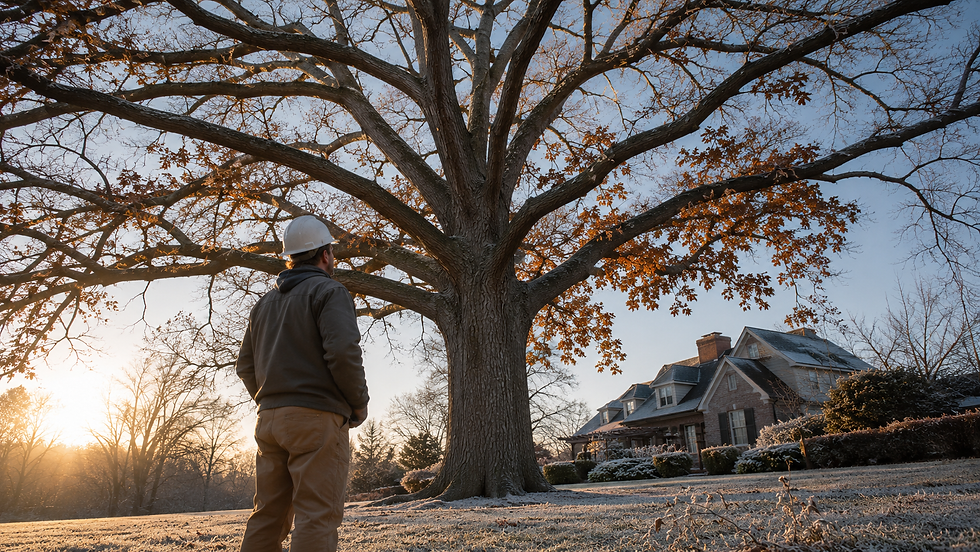
A careful look before winter gives you time to address concerns before the first major storm. Here are seven things homeowners in Springfield, Ozark and the surrounding communities should check this fall.
1. Dead, Broken or Hanging Branches
Start by looking up from a safe place on the ground. Watch for branches that are already cracked, broken, hanging or missing large areas of bark. Dead or damaged limbs can be more likely to fail when they are loaded with snow or ice or moved by strong wind.
Pay particular attention to branches over your home, driveway, parking area, sidewalk or places where your family spends time. Do not stand beneath a hanging branch or attempt work that requires climbing. Large or elevated branches should be evaluated and handled professionally.
2. Cracks and Weak Branch Unions
Look where major limbs or multiple trunks join together. Tight, V-shaped unions, visible cracks, opening seams or unusual movement after a storm can indicate a structural concern. A tree with more than one main stem is not automatically unsafe, but its structure should be considered carefully—especially when a home or frequently used area is nearby.
Depending on the tree and the defect, the right recommendation could include selective pruning, a cable-support system, continued monitoring or removal. Cabling can provide added support in certain situations, but it is not appropriate for every tree and does not replace future inspection.
3. Long Limbs With Too Much Weight at the Ends
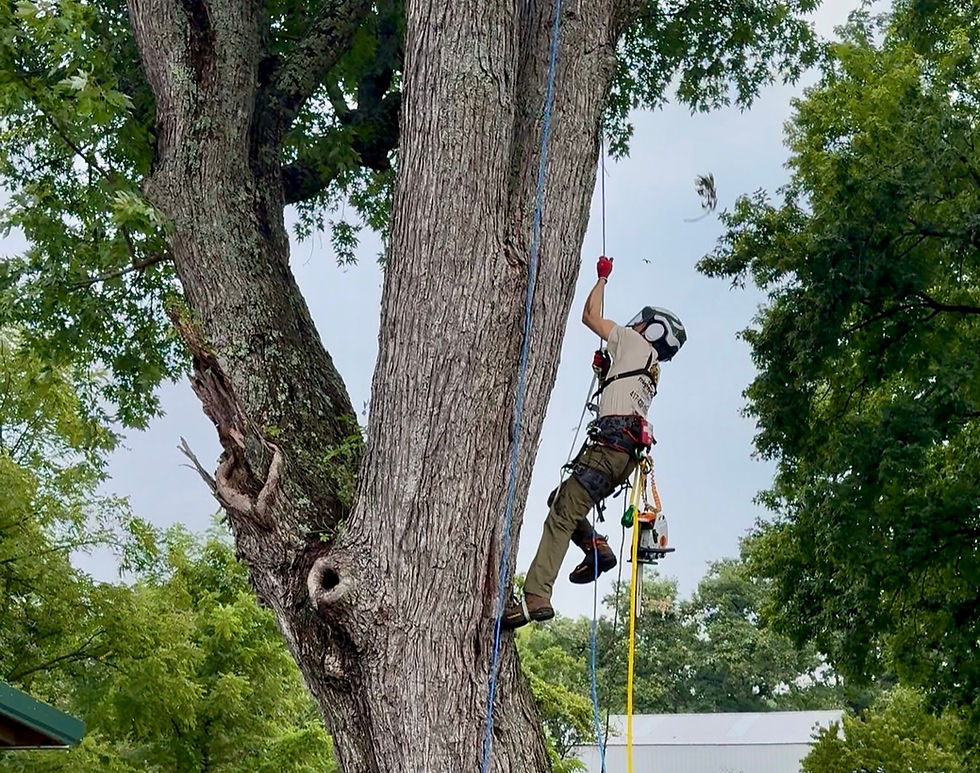
Snow and ice add weight to branches. Long limbs with heavy growth concentrated toward their ends can experience greater leverage at their attachment points.
Proper pruning may improve weight distribution while preserving the tree’s natural form. Topping is not the answer. Removing large portions of a tree’s crown or leaving random stubs can create additional stress, weak regrowth and future problems. Good pruning is selective and based on the tree’s structure—not simply on making it smaller.
4. Damage Left From Earlier Storms
Old storm damage can be easy to overlook once leaves fill the canopy. Check for torn branch attachments, split limbs, large stubs or wounds that have changed since you last noticed them. A damaged branch that stayed in place through summer may still become a concern under winter loading.
When leaves begin to fall, the tree’s structure becomes easier to see. This makes fall and winter a useful time to identify damaged, crossing or poorly positioned branches and plan appropriate work.
5. Whether the Pruning Time Is Right for That Tree
Winter can be an excellent time to prune many deciduous trees because the leaves are down and the branch structure is easier to evaluate. Timing still matters, however. The best time can vary with the tree species, its condition and the reason for pruning.
Oaks deserve special attention in Missouri. The Missouri Department of Conservation advises avoiding pruning or damaging oaks from mid-March through June because fresh wounds during that period can increase the risk of oak wilt transmission. Planned winter pruning can help avoid that higher-risk window.
Dead, broken or immediately hazardous branches may need attention regardless of the season. When in doubt, have the tree evaluated before making large cuts.
6. Mulch Around the Root Zone—Not Against the Trunk
A broad, even layer of organic mulch can help retain soil moisture and reduce temperature swings around the roots. The trunk and root flare should remain visible, with mulch kept away from direct contact with the bark.
Avoid piling mulch into a “volcano” around the trunk. Excessive or poorly placed mulch can hold moisture against the bark and hide developing problems. A wider, properly applied mulch ring is more useful than a deep pile at the base of the tree.
7. Moisture for Young and Newly Planted Trees
Young and recently planted trees may enter winter under stress if autumn has been dry. When the soil is dry and not frozen, appropriate watering can help the root system go into winter with adequate moisture. The soil should not remain saturated, and the amount needed will depend on the site and drainage.
Continue checking newly planted trees, mulch placement and any staking or bracing. Supports should not rub the bark or remain in place longer than necessary.
Do All Leaning Trees Need to Be Removed Before Winter?
No. Some trees develop a natural lean and remain stable for many years. More concerning signs include a lean that has recently changed, lifting soil, exposed or damaged roots, new cracks, or movement at the base. Those conditions deserve a closer evaluation, particularly when the tree could reach a structure or frequently used area.
The goal is not to remove every imperfect tree. It is to understand the tree, its condition and what could be affected if something fails, then choose a reasonable course of action.

Schedule Your Winter Tree-Care Evaluation
Winter tree care starts with checking for problems before the first ice storm. Do not wait for the first ice storm to reveal a problem that could have been addressed ahead of time. Mighty Oaks Tree Care provides professional tree pruning, tree removal, storm cleanup, tree cabling and support, planting, and mulching in Springfield, Ozark and surrounding Southwest Missouri communities.
We are locally owned and family operated. Mighty Oaks may be a new local company, but we are not new to the Ozarks or to tree work. We care for our communities like family, visit your property in person and provide a clear estimate based on what your trees actually need.
Preserving Today’s Trees for the Generations That Follow.


Comments