
PROFESSIONAL TREE CARE • SOUTHWEST MISSOURI
Storm Damage Tree Care
Severe weather can leave fallen limbs, hanging branches, split stems, damaged canopies or trees that have shifted at the base. After the storm, the job is to understand both what came down and what changed in the tree that is still standing.
Mighty Oaks provides scheduled storm damage tree care and cleanup for residential and commercial properties in Ozark, Nixa, Springfield, and surrounding Southwest Missouri communities. We look at the tree and property in person, then explain whether the work calls for cleanup, corrective pruning, removal, or another next step within our scope.

Based in Ozark • Serving Ozark, Nixa, Springfield & surrounding Southwest Missouri communities.
Scheduled Storm Cleanup • Broken & Hanging Limbs • Pruning & Removal Options • Property Cleanup
Scheduled service only • Mighty Oaks does not provide 24/7 emergency response or utility-line clearance.
Fallen Limbs & Debris
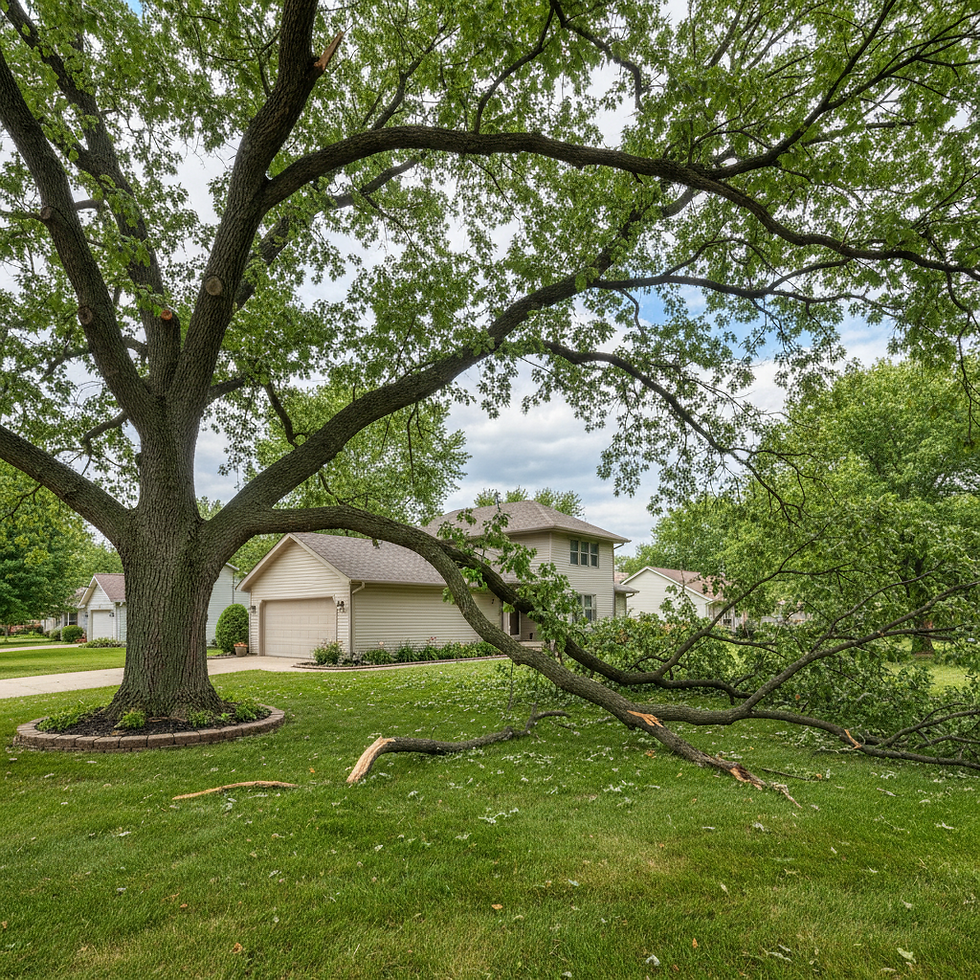
A storm may leave branches, limbs or other tree debris across the yard, driveway or other usable areas of the property.
In some cases, the main need is cleanup. In others, the fallen material may be connected to additional damage that should be considered before the remaining tree is left as-is.
What Are You Dealing With After a Storm?
Storm damage can look very different from one property to another. Some situations are mainly about fallen branches and cleanup, while others involve damage to a tree that is still standing. The first step is understanding what was affected before deciding what work makes sense.
Damaged but Standing Trees
A tree may remain standing after a storm while still having broken limbs, torn branch attachments, canopy damage or other visible changes.
That does not automatically mean the tree needs to be removed. The location and extent of the damage, the condition of the tree before the storm and the amount of sound structure that remains all help shape the next decision.
Major Structural or Root Damage
Split stems, major trunk damage, significant root movement or partial uprooting can change the situation considerably.
These conditions deserve a closer look because the important question is not simply how dramatic the damage appears, but how much important structure has been affected and what reasonable options remain.
Storm damage does not automatically mean removal. The right next step depends on what was damaged, what remains sound and what surrounds the tree.
Storm Safety Note
If a damaged tree or broken branches are contacting or entangled with downed electrical lines, stay away from the area and contact the utility provider. Mighty Oaks does not perform utility-line clearance.
Signs of Storm Damage Worth a Closer Look
After severe weather, some changes are easy to see while others may be less obvious. None of these conditions automatically means a tree must be removed, but they are reasonable reasons to look more closely at what changed and how the rest of the tree was affected.
Broken or Hanging Limbs
Broken, partially attached or suspended limbs can remain in the canopy after a storm. Their size, position and what is beneath them all matter.
Fresh Trunk or Major-Limb Cracks
Fresh cracks, splits or visible separation in the trunk or a major limb are worth closer attention, especially when they appeared during the storm.
Root Plate or Soil Movement
Lifted soil, new cracking around the base, exposed roots or other root-plate movement can indicate that the tree shifted in the ground.
Split Stems or Branch Unions
Fresh separation or torn wood where major stems or branches join can show that an important structural connection changed during the storm.
New or Increased Lean
A new or increasing lean deserves different consideration from a tree that has naturally leaned the same way for years, especially when soil or root movement is also visible.
Major Canopy Damage
Loss of a substantial portion of the canopy deserves a broader look at how much living canopy and important trunk and branch structure remain.
A dramatic-looking storm injury does not automatically determine the outcome. What matters is which parts of the tree were affected, what remains sound and how the tree responds as a whole.
Can a Storm-Damaged Tree Recover?
Sometimes. A tree can look dramatically different after a storm and still have reasonable options other than removal. Recovery depends less on how dramatic the damage looks and more on what part of the tree was affected, what condition it was in beforehand and how much sound structure and living canopy remain.
Condition Before the Storm
A tree that was healthy and functioning well before the storm may have different options from a tree that was already experiencing substantial decline, decay or structural problems.
Where the Damage Occurred
Losing several smaller branches is very different from damage to the trunk, major stems or important branch attachments. The location and extent of the damage matter as much as the amount of material that came down.
Trunk & Root Condition
Fresh trunk damage, root-plate movement or significant root disturbance can change the situation considerably. The trunk and root system support the rest of the tree, so their condition should be considered alongside the visible canopy damage.
Remaining Living Canopy
The amount and distribution of living canopy that remains can help indicate whether corrective pruning and time may be reasonable or whether too much important structure has been lost.
Storm recovery is not about making every damaged tree stay. It is about determining whether enough sound structure and living canopy remain for the tree to have reasonable options.

Broken, Hanging & Partially Attached Limbs
Storm damage does not always separate a branch cleanly. A limb may fall completely, remain partly attached or become lodged elsewhere in the canopy.
How the branch failed, where it is positioned, what is supporting it now and what damage remains at its attachment can all matter when deciding what work makes sense next. Storm-bent or partially attached wood may also be under stored tension, which can affect how it moves when work begins.
Completely Broken Limbs
Some branches separate completely and fall to the ground or onto another part of the property. In those situations, cleanup may be part of the work, but it can also be useful to consider what happened where the branch separated from the tree.
Partially Attached Limbs
A damaged limb may remain connected by part of the original wood, bark or branch attachment. The size of the limb, how much attachment remains and the condition of the surrounding wood can affect what should be considered next.
Suspended or Hung-Up Limbs
A broken branch may become lodged in other branches instead of reaching the ground. Being caught in the canopy does not necessarily mean the limb is stable. Its position, what is supporting it and what lies beneath it should all be understood before work is planned.
Damage Left at the Attachment
When a branch tears or breaks away, the remaining tree may have exposed wood, a damaged branch union or injury extending into nearby structure. That remaining condition can help determine whether the situation involves straightforward pruning or deserves broader consideration.
A broken limb can be the visible part of a larger injury. What remains attached to the tree matters just as much as what came down.
Storm-Damaged Wood Can Behave Differently
Bent, twisted, partially attached or suspended limbs can hold stored energy and may move unexpectedly when cut or released. Large storm-damaged limbs, work requiring climbing, and branches under significant tension should not be treated like ordinary ground cleanup.
Split, Leaning & Partially Uprooted Trees
Storms can change the main structure of a tree, not just its smaller branches. A fresh split, a new lean or movement at the base deserves closer attention because these changes may involve the trunk, major stems or roots that support the tree.
These conditions do not all lead to the same recommendation. The question is how much important structure moved or separated, what remains sound and what reasonable management options are still available.
Split Stems or Trunk Damage
Fresh separation between major stems, new trunk cracks or torn wood can indicate that important structural connections were affected. The location and extent of the split, the amount of sound wood that remains and the rest of the tree’s condition all matter when considering what options remain.
New or Increased Lean
A tree that has leaned for years is different from one that shifted during a storm. A newly developed or increasing lean, especially when accompanied by changes at the base or surrounding soil, provides important context about what may have moved.
Partial Uprooting & Root Plate Movement
Wind and saturated soil can sometimes move a tree’s root plate without bringing the entire tree to the ground. Lifted soil, cracking around the base, exposed roots or a newly shifted trunk may indicate that anchoring roots have moved or failed.
For larger established trees, significant root-plate movement is a major structural concern and generally leaves fewer reasonable preservation options than branch damage alone. The amount of movement, remaining root support and condition of the trunk all matter when determining what should happen next.
Pruning or Removal After a Storm?
Storm damage does not automatically determine what should happen next. Some trees may have damage that can reasonably be addressed through pruning, while others may lose too much important structure for removal to be avoided.
The decision should be based on what was damaged, what remains sound, the condition of the tree as a whole and what surrounds it.
Pruning May Be a Reasonable Option
Corrective pruning may be appropriate when storm damage is concentrated in selected branches and enough sound trunk, stem, root and canopy structure remains to reasonably retain the tree.
The goal is not simply to remove everything that looks damaged. Pruning should address the affected branches while considering how much live canopy remains and how the work will influence the tree’s structure afterward.
Removal May Deserve Stronger Consideration
Removal may become the more reasonable option when storm damage affects major trunk or stem structure, substantial root support, or enough of the tree that too little sound structure and living canopy remain.
The appearance of one broken branch or one visible defect should not determine that decision by itself. The significance of the damage depends on where it occurred, how extensive it is and how it affects the tree as a whole.
Sometimes the Decision Is Not Immediate
Not every storm-damaged tree requires an immediate decision between pruning and removal. Depending on the type and extent of the damage, the tree’s condition may sometimes be better understood with time, observation or monitoring.
When there is no immediate concern requiring action, time can sometimes provide useful information about how the remaining tree responds.
Monitoring does not mean ignoring damage. It means recognizing that some tree-care decisions are better made with context and an understanding of how the tree responds after the storm.
The goal after storm damage is not to save every tree or remove every damaged tree. It is to choose a reasonable next step based on the tree, the damage and the property around it.
Storm Damage Cleanup & Follow-Up Work
After a storm, cleanup may involve more than collecting branches that have already reached the ground. Broken material may still be attached to a tree, debris may affect how the property is being used, and the remaining tree may need to be considered before the work is treated as a simple cleanup project.
Fallen Branches & Tree Debris
Storms can leave limbs, branches and tree-related debris across lawns, driveways, walkways and other parts of the property. The amount, location and type of material help determine what cleanup is actually part of the work.
Broken Material Still in the Tree
Not everything damaged by a storm reaches the ground. Broken or partially attached branches may remain in the canopy, and those conditions may need to be addressed as part of the tree work rather than treated as ground cleanup alone.
Access & Use of the Property
Tree debris may block or interfere with driveways, walkways, gates, lawn areas or other spaces around the property. How the material is positioned and what areas need to remain usable can affect how the work is organized.
A Clear Cleanup Scope
The estimate should make the agreed scope clear, including what storm-damaged tree work is being performed and what will happen to the branches, brush and wood from that work.
It should also make clear what is not included when that matters, so the homeowner understands the actual job rather than assuming every storm-cleanup project includes the same services.
Storm cleanup should address the work that actually needs to be done on the property — both what came down and, when appropriate, what damage remains in the tree.
How Storm-Damage Work Is Planned
Storm-related tree work should fit the actual damage and the property around it. A broken limb in an open yard may involve a very different plan from similar damage near a house, fence, driveway or landscaping.
Before work is organized, it helps to understand what changed in the tree, what needs to be considered around the work area, how the property can be accessed and what the agreed scope includes.
01
Understand What Changed
Look at the damaged branches, trunk, major stems, root plate and remaining canopy to understand what the storm actually affected. The plan should be based on the condition of the remaining tree — not simply the amount of debris on the ground.
02
Consider the Property Around the Tree
Homes, garages, fences, driveways, landscaping and neighboring property can affect the usable work area. These features should be considered when deciding how branches and debris can be moved and where material can be placed during the work.
03
Account for Access & Working Space
Gates, slopes, narrow side yards, wet ground, landscaping and the amount of open space around the tree can influence how the job is organized. The available working space should shape the plan rather than forcing every storm-damage project into the same approach.
04
Confirm the Agreed Scope
Before work begins, the estimate should make clear which tree work is included, how branches, brush and wood will be handled and any important exclusions from the quoted work.
That gives both the homeowner and the crew a clear understanding of what the project includes before the first cut is made.
Good storm-damage work starts with a plan that fits the tree, the damage and the property.
Storm Damage Tree Care Questions
Storm damage can leave homeowners with questions about whether a tree can remain, whether pruning may help or whether removal deserves stronger consideration. The answers depend on what was damaged, what remains sound and the condition of the tree and property as a whole.
Does Storm Damage Always Mean a Tree Needs to Be Removed?
No. Some storm-damaged trees may still have reasonable pruning, monitoring or recovery options. The condition of the tree before the storm, the location and extent of the damage, the trunk and root condition and the amount of sound structure and living canopy that remain all help shape the decision.
Can Broken Branches Be Pruned Instead of Removing the Tree?
Sometimes. When damage is concentrated in selected branches and enough sound trunk, stem, root and canopy structure remains, corrective pruning may be a reasonable option. Pruning cannot reverse every type of structural damage, and it does not guarantee how a storm-damaged tree will respond afterward.
What About a Hanging or Partially Attached Limb?
A broken limb may remain partly connected or become lodged elsewhere in the canopy. Its size, position, remaining attachment and the condition of the surrounding wood can all matter when determining what tree work should be considered.
What if the Tree Started Leaning After the Storm?
A tree that newly shifted during a storm is different from a tree that has naturally leaned in the same direction for many years. A new or increasing lean, especially when accompanied by lifted soil, cracking at the base or other root-plate movement, provides important information about what changed.
Can a Partially Uprooted Tree Remain?
There is not one answer for every partially uprooted tree. The amount of root-plate movement, the condition of the remaining roots and trunk, how much important structure was affected and the tree’s overall condition all matter when considering what reasonable options remain.
What Should a Storm-Damage Estimate Explain?
A useful estimate should clearly describe the tree work being proposed and how branches and debris from that work will be handled. The scope should make it clear what is included so the homeowner understands what work is actually being priced.
Not sure whether storm damage calls for pruning, removal, cleanup or more time? The first step is understanding what actually changed in the tree and what surrounds it.
Trusted Tree Care Resources
Concerned About Storm Damage?
STORM DAMAGE TREE CARE • SOUTHWEST MISSOURI
Whether you are dealing with fallen limbs, broken branches, a damaged but standing tree or simply are not sure what should happen next, the first step is understanding what changed.
We’ll look at the tree, listen to your concerns and talk through a reasonable next step based on the damage, the surrounding property and the work being considered.
Thoughtful Evaluation • Pruning & Removal Options • Storm Cleanup • Respect for Your Property
Based in Ozark • Serving Ozark, Nixa, Springfield & surrounding Southwest Missouri communities.
Family-Owned • Licensed & Insured • Free In-Person Estimates